





The dowry chest – precursor of modern-day furniture
Recently, I’ve been quite curious about the legacy of traditional furniture-making. How did furniture evolve into the pieces we use today in our living rooms and kitchens? How was it made back in the days before chipboard panels and plastic coatings?
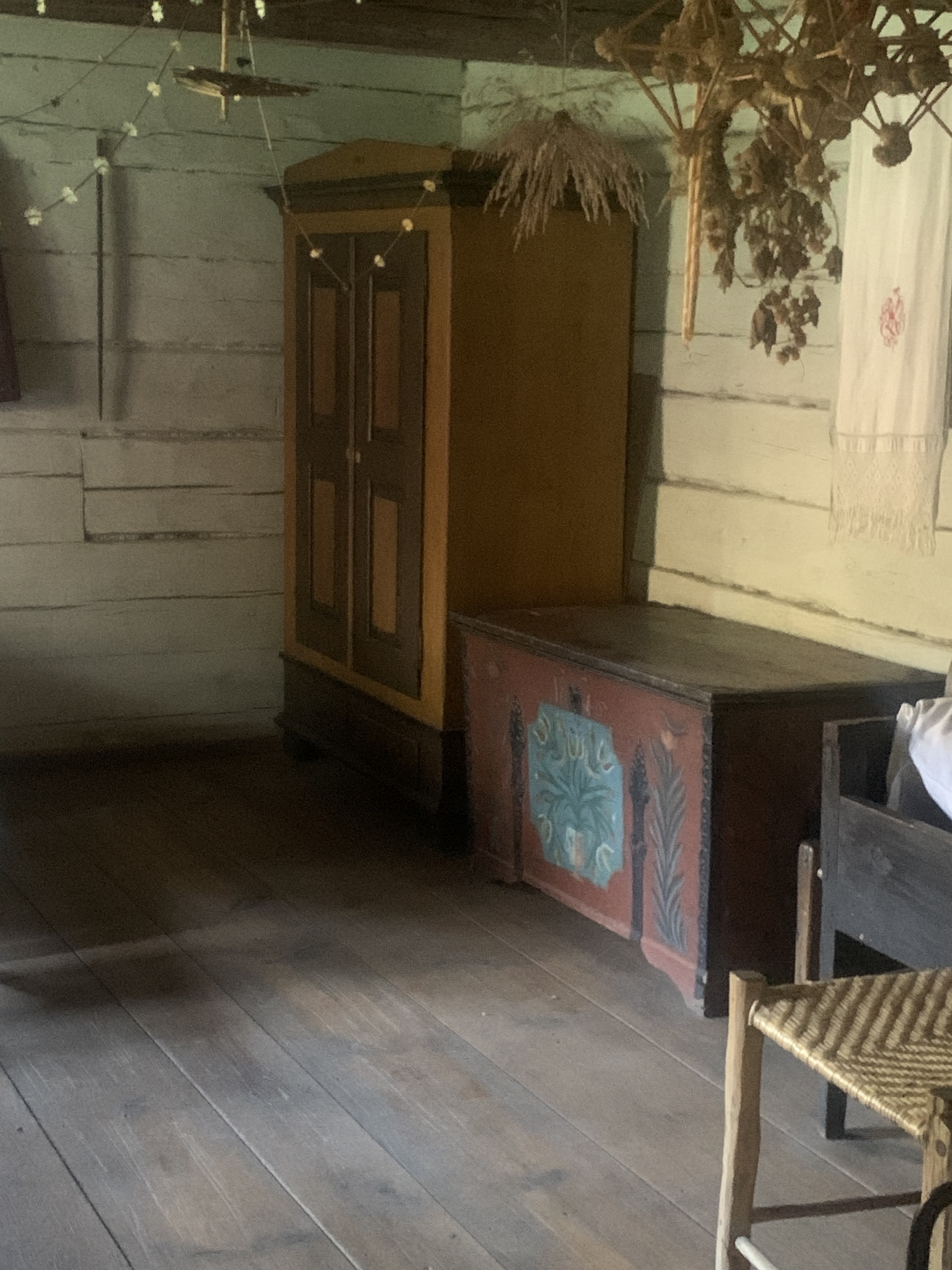
One of the very first pieces of furniture found in households from the 18th to 20th century was the dowry chest—a box-like chest with a lid. It was mainly used by young women to store clothing, linen, bedsheets and blankets. Varying in size and shape, each chest was uniquely designed and decorated. These items were not only practical but also aesthetically pleasing and symbolic—often representing the status and wealth of a family.
In Europe, dowry chests were commonly painted in brown, green, blue or maroon. Sometimes they were left unpainted and treated with linseed oil. Made either at home or by local craftsmen, no two dowry chests were exactly alike.
Yet despite their differences, the painted motifs often followed a common theme: a central pot with flowers, a symbol of fertility, usually painted with fine brushes in vivid colors.
Almost all of these chests had at least one lock to protect the valuables inside.
Interestingly, by the time a young woman married, her dowry chest was expected to be filled with needlework she had made herself. In wealthy families, there could be as many as five dowry chests passed down or prepared for the occasion.
